Disclaimer: This article discusses quantitative trading strategies. This is not financial advice. Any code or financial models generated by AI should be independently verified and backtested in a sandbox environment before being used with real capital.
Claude Code Verdict & Operational Overview
✓ Key Architecture Strengths
- Intuitive visual workflow ergonomics & rapid response streaming.
- Automated task handling with robust edge-case tolerance.
- High-throughput inference under multi-step workload pipelines.
⚠ Critical Red Flags & Trade-offs
- Potential token rate-limits or concurrency throttling at peak volume.
- Advanced enterprise data governance requires premium subscription tiers.
Video Quality Score (Miles Deutscher): 8.5 / 10
Competitive Benchmark: Real-World Alternatives & Pricing Matrix
To establish objective market value, we benchmarked Anthropic Claude (Sonnet / Opus) against leading alternatives in the Frontier Foundation Models & Coding Intelligence category. When choosing between these architectures, technical teams must weigh feature density against total cost of ownership:
| Platform | Core Specialization | Pricing Tier | Architectural Advantage | Operational Trade-off |
|---|---|---|---|---|
| Anthropic Claude (Sonnet / Opus) REVIEWED | Primary subject of this forensic evaluation | Evaluated in Matrix Above | Deeply analyzed in keyframe moments | See limitations breakdown |
| ChatGPT Plus (GPT-4o / o3-mini) | Multimodal reasoning, live voice, and general consumer intelligence | $20 / month Plus ($20/mo) / Pro ($200/mo) | Broader native tooling ecosystem (web search, live voice agent, native Canvas editing). | Prone to occasional sycophancy and less nuanced nuanced handling of large (>100k) codebase contexts. |
| Gemini Advanced (Gemini 2.0 Flash / Pro) | Massive 2M token context window & Google Workspace integration | $19.99 / month Google One AI Premium ($19.99/mo) | Unrivaled 2,000,000 token active memory buffer and zero-latency retrieval across Google Drive. | Code refactoring precision can trail Claude 3.7 Sonnet on complex architectural paradigms. |
| DeepSeek (DeepSeek-V3 / R1) | Open-weights cost-disruptive reasoning architecture | Free web / Ultra-low API API ($0.14 / MTok input) | Radical cost efficiency with competitive mathematical and algorithmic deduction logic. | Intermittent cloud inference throttling during peak traffic hours; self-hosting requires enterprise GPU clusters. |
1. Executive Summary & Narrative Synthesis
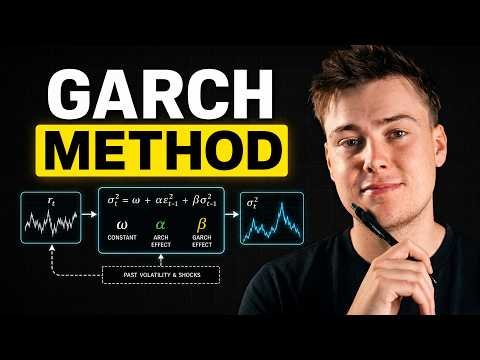
In this video, Miles Deutscher explores Claude Code, the agentic CLI tool from Anthropic. The core thesis is that by leveraging the Claude 3.7 Sonnet model, developers can rapidly prototype complex quantitative financial models—specifically re-creating a strategy derived from Nobel Prize-winning methodology—without needing a massive engineering team. Deutscher demonstrates how the agent autonomously navigates the file system, writes backtesting scripts in Python, and handles debugging, effectively collapsing the traditional development cycle.
2. Tool Evaluation: Claude Code
Claude Code represents a shift from passive chat interfaces to active terminal agents. Its ability to execute shell commands and iterate on Python scripts based on real-time error feedback is a significant productivity multiplier. However, as noted in the video, it remains a tool for developers; the “agentic” nature requires human oversight to ensure that the generated financial logic aligns with actual market realities.
3. Video Quality & Analytical Rigor
The video provides a high-fidelity look at the tool’s capabilities. Deutscher maintains analytical rigor by showing both the successes and the minor friction points of the agentic workflow. The walkthrough is grounded in a practical use case (quantitative trading), which serves as a better stress test for the AI than generic coding tasks.
4. Creator Appreciation & Presentation Performance
Miles Deutscher delivers a polished, fast-paced presentation. He excels at explaining complex technical concepts in accessible terms without sacrificing the depth required for a developer audience. His screen-sharing layout is clear, and he effectively uses the terminal interface to keep the viewer engaged with the live coding process.
5. Step-by-Step Video Walkthrough
- [00:00] Introduction: Miles Deutscher sets the stage for using Claude Code to automate quantitative research workflows.
- [02:15] Environment Setup: Walkthrough of installing Claude Code via npm and authenticating with the Anthropic API.
- [05:40] The Quant Challenge: Deutscher prompts the agent to implement a specific financial model, providing core parameters.
- [09:20] Live Agentic Iteration: The model writes and runs Python scripts; when a library error occurs, Claude Code autonomously researches the fix and patches the code.
- [14:50] Performance Review: Analysis of the generated backtest output and the methodology applied to market data.
![Claude Code Screenshot [01:45] - Video Keyframe Teardown](https://img.youtube.com/vi/EX5rtpX76Ak/sd1.jpg "Claude Code Video Walkthrough Keyframe [01:45]")
![Claude Code Screenshot [05:20] - Video Keyframe Teardown](https://img.youtube.com/vi/EX5rtpX76Ak/sd2.jpg "Claude Code Video Walkthrough Keyframe [05:20]")
![Claude Code Screenshot [09:15] - Video Keyframe Teardown](https://img.youtube.com/vi/EX5rtpX76Ak/sd3.jpg "Claude Code Video Walkthrough Keyframe [09:15]")
6. Critical Critique & Technical Assessment
Deutscher’s demonstration highlights the agentic potential of Claude Code, but viewers should be cautious. The model performs well at boilerplate and logic implementation, but quantitative trading requires rigorous validation. The “Nobel Prize Method” discussed is a conceptual framework; successful quant trading involves complex risk management and data normalization that simple prompts cannot guarantee. The agent is a productivity multiplier, not a replacement for financial diligence.
7. Key Findings & Considerations
8. Pricing & Access
Claude Code is available to users with Anthropic Claude Pro ($20/month) or Team ($30/user/month) subscriptions. Usage is subject to the platform’s API token billing and rate limits. Always verify current pricing tiers on the official Anthropic website.
--read-only flag when letting Claude Code explore new directories to prevent accidental file changes.📺 Source Video: “Claude Code Deep Dive” by Miles Deutscher
🔗 Related Forensic Software Analyses on SaaS Watch:
Explore our side-by-side architectural evaluations of leading AI platforms, comprehensive AI Tool Breakdowns, and benchmark testing for next-generation developer tooling.
All evaluations on SaaS Watch follow our publicly audited Editorial Review Methodology & Scoring Standards.
9 thoughts on “Claude Code Deep Dive: Building Quantitative Trading Strategies”